Evidence gallery
The public gallery contains new community evidence and an earlier site record, including credited photographs and source-message screenshots dated August 2026.
Captions distinguish what an image directly shows from attributed statements that have not been independently verified. Each item identifies wildlife, water-quality, permitting, records, or environmental questions that may require official review.
Private submissions are not published automatically. Evidence remains private until it is reviewed and approved for the public gallery.
La Orilla Advocacy Project
During an exceptionally dry Albuquerque summer, persistent water inside the La Orilla Outlet Water Quality Structure became an unintended refuge for wildlife. On August 25, 2026, AMAFCA-authorized work began while animals were still present. Before citizens intervened, workers dumped a considerable amount of dirt into the habitat, likely covering some animals still inside.
A public outcry grew as residents tried to save the animals. Only afterward did people associated with the City of Albuquerque’s Urban Biology Division and Albuquerque Open Space personnel appear at the site. Residents who protested and tried to intervene were also portrayed as agitators or as interfering with city workers doing their jobs. The public record does not show a complete wildlife survey or habitat assessment before work began, and the later response left the handling, relocation, and fate of the animals unresolved.
The La Orilla Advocacy Project documents what happened, preserves evidence, seeks accountability, and works to prevent it from happening again.
AMAFCA authorized the on-site work, but that agency authorization is distinct from the question of whether every required permit and regulatory approval was obtained. The filling appears to have proceeded without publicly available evidence of a proper hydrologic survey, wildlife survey, habitat assessment, water-quality assessment, or review of impacts to connected waterways. Because the site is close to the Rio Grande watershed, it may threaten protected native species, including the Rio Grande silvery minnow, and may contaminate its habitat through changes to water quality, sediment, or runoff. This calls for field checks and water-quality testing.
As stewards of this environment, we cannot accept AMAFCA-authorized work that included the attempted filling of a living habitat.
Evidence
Evidence gallery
Submit your own evidencePhoto details and legal review
The screenshot shows a City of Albuquerque Urban Biology Contact page listing Nicholas D. Pederson as Urban Biology Division Manager in the Environmental Health Department. The project's accompanying account identifies Pederson as overseeing the removal of the animals.
Officials should document the role attributed to Pederson through assignment records, work orders, wildlife-handling logs, contractor records, communications, and animal-removal or relocation authorizations, including the scope of his responsibility, the animals handled, and the outcome of the work.
Photo details and legal review
The supplied image depicts an animal appearing to be a deceased beaver beside a roadway. The associated public post attributes the photographs to Jenn Wilson, identifies the area as Paseo and Coors, and reports a visual match to the beaver the community had been trying to save. The photograph itself does not establish those contextual details.
A qualified examination should document species, condition, location, time and cause of death, injuries, chain of custody, and whether the animal was handled, trapped, moved, or affected by work at La Orilla. The image supports an urgent evidence-preservation and records request but does not by itself prove causation, intent, permit noncompliance, or a crime.
Photo details and legal review
The public-post screenshot reports that Jenn Wilson photographed a deceased beaver near Paseo and Coors. Brittany Walters says she compared prior images and video and identified the deceased animal as the same beaver the community had been trying to save because the tail notches matched. The screenshot preserves that attributed identification; it is not an independent wildlife, veterinary, or forensic finding.
Officials should preserve and examine the carcass, original files and metadata, location records, witness accounts, handling and relocation logs, work chronology, and any necropsy or veterinary findings. Review should determine identity, time and cause of death, any connection to the La Orilla work, and applicable New Mexico furbearer and wildlife authority. The post does not establish who caused the death, purposeful conduct, or a legal violation.
Photo details and legal review
The supplied screenshot shows a public social-media post with a still image of an algae-covered waterway. The post reports a beaver’s death, says the writer recognized matching tail notches, and alleges that Albuquerque Metropolitan Arroyo Flood Control Authority work destroyed the animal’s only habitat. The screenshot preserves those statements as attributed source material; it is not an independent wildlife, veterinary, forensic, or site finding.
Officials should preserve the original post, image files and metadata, identify the source and location, and examine any carcass, wildlife-handling records, work chronology, habitat conditions, and necropsy or veterinary findings. Review should determine whether the reported death occurred, the animal’s identity, the time and cause of death, and any connection to the La Orilla work. The screenshot does not establish causation, intent, or a legal violation.
Photo details and legal review
The public-post screenshot urges calls and peaceful protest, says a bulldozer was removing material, and credits the attached photographs to Kathleen Poole. Statements about animal losses are advocacy claims that require confirmation from original evidence and official records.
The described work warrants review of fill, dredging, dewatering, and wildlife-handling records under Sections 301, 402, and 404 of the Clean Water Act, New Mexico water-quality law, and applicable state wildlife rules. The post is source context; it does not independently prove a discharge, injury, permit failure, or crime.
Photo details and legal review
The photograph shows the channel structure, disturbed ground, fencing and tape, vehicles, and heavy equipment together in one wide view. It documents site conditions and equipment presence but not who authorized or operated the work.
Agencies should determine ownership, work scope, aquatic jurisdiction, fill and dewatering permits, sediment controls, and whether pre-work wildlife and habitat surveys were required and completed. Potential review includes Sections 301, 402, and 404 of the Clean Water Act and the New Mexico Water Quality Act; the image alone does not establish jurisdiction or a violation.
Photo details and legal review
A front loader and truck are visible on the dirt access area behind the fence. The image confirms equipment at the site but does not show what material was moved, where it was placed, or whether a discharge occurred.
Review should focus on work orders, operator and contractor records, fill source and volume, machinery paths, stormwater controls, dewatering, and permits under Sections 301, 402, and 404 of the Clean Water Act. Equipment presence alone does not prove regulated fill or permit noncompliance.
Photo details and legal review
The close view shows recently exposed or disturbed soil beside the concrete structure, fencing, yellow tape, and the channel opening. It helps document ground disturbance near the drainage feature.
Agencies should inspect whether soil entered the channel, whether erosion and sediment controls were required, and whether fill, construction-stormwater, or dewatering authorization applied under Sections 301, 402, or 404 of the Clean Water Act and New Mexico water-quality rules. The photograph does not establish the drainage path or permit status.
Photo details and legal review
The screenshot shows a statement attributed to State Representative Cynthia Borrego, dated August 27, 2026, responding to community concerns about wildlife affected by maintenance at a flood-control structure near Coors Boulevard and La Orilla Road Northwest. It is source material attributed to the screenshot, not an independently verified statement.
Preserve the original release and confirm authorship, distribution, the official record, the maintenance scope, the agencies and wildlife professionals involved, the animals handled, and all capture, transport, relocation, and outcome records.
Photo details and legal review
The readable message reports a count of more than 40 turtles, names four turtle types, and says turtles were relocated to the Rio Grande Nature Center and Tingley Beach. It is an attributed account preserved in a screenshot, not an official inventory or permit record.
Agencies should verify species identity, native or protected status, counts, handlers, receiving-site approval, and every capture, transport, and release authorization. Review may be needed under 19.35.10 New Mexico Administrative Code, the New Mexico Wildlife Conservation Act, and—only if a federally listed species or federal action is involved—the Endangered Species Act. The screenshot does not itself prove a permit violation.
Photo details and legal review
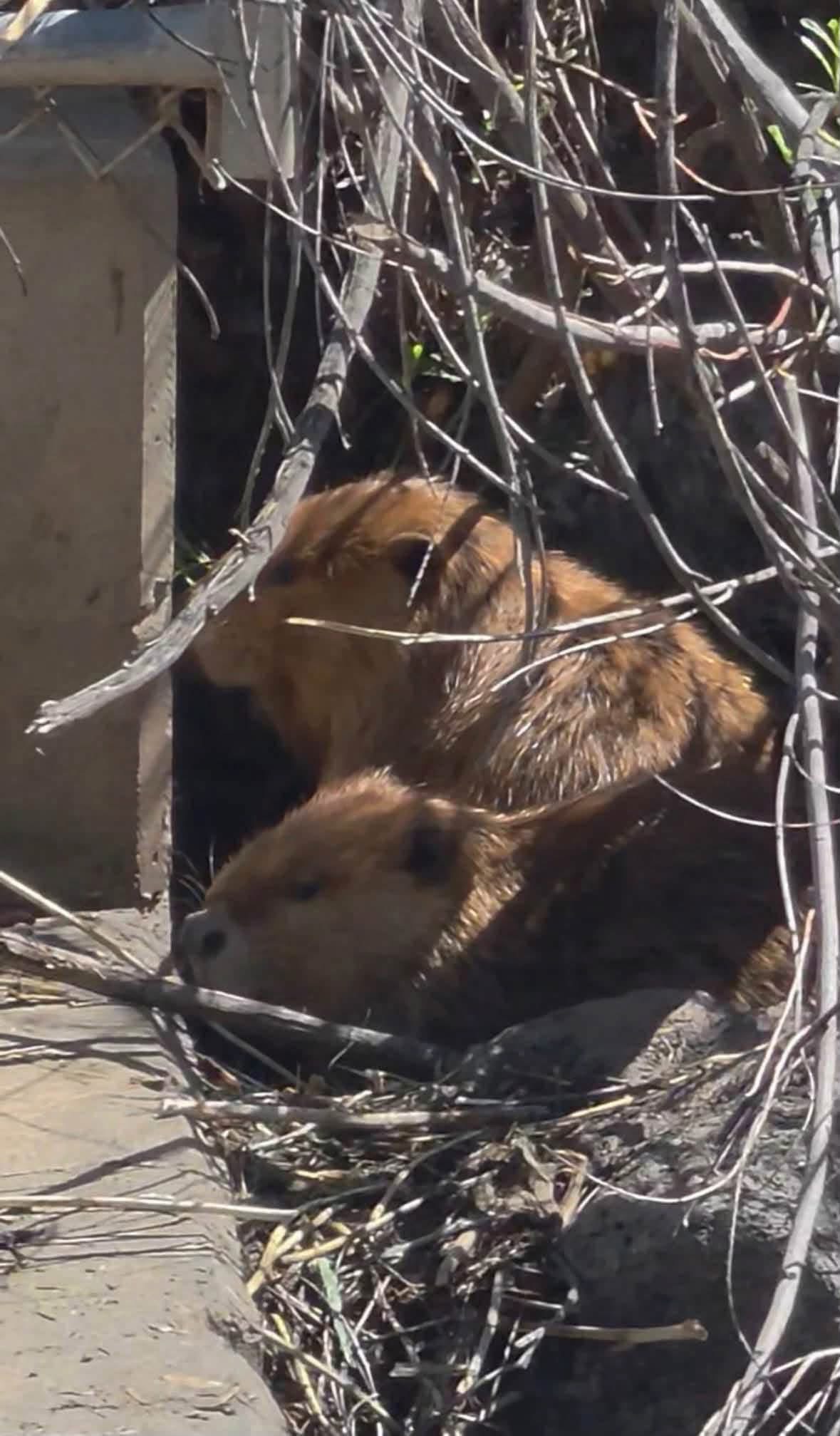
The supplied photograph directly depicts one beaver in the waterway. Reviewed witness and site material confirms two beavers living at La Orilla and one beaver den. AMAFCA had not independently confirmed the observation as of its August 26 statement; dates, location, species identification, den condition, and disposition should still be checked against the original files and agency records.
Any capture, transfer, or relocation should be checked against New Mexico Statutes Annotated Section 17-3-31 and 19.32.2 New Mexico Administrative Code. Agencies should also document any den, lodge, dam, dependent young, handler authority, destination assessment, and monitoring. Presence alone does not prove unlawful take.
Photo details and legal review
The photograph appears to show soil or fill being unloaded beside the channel. It documents the activity’s proximity to the aquatic area but not the material’s final placement or legal status.
This activity warrants prompt review under Sections 301 and 404 of the Clean Water Act, the Section 404(b)(1) Guidelines in 40 Code of Federal Regulations Part 230, and state water-quality requirements. Agencies must determine whether material entered regulated waters, what authorization applied, and whether avoidance or restoration is required.
Photo details and legal review
Heavy equipment and fresh soil are visible near the channel. The image documents disturbed conditions but does not establish the soil’s source, volume, destination, or whether it entered water.
Review may be needed under Sections 301, 402, and 404 of the Clean Water Act for fill, runoff, stormwater, or dewatering, together with New Mexico water-quality rules. Agencies should inspect permits, work plans, sediment controls, and before-and-after conditions rather than infer a violation from equipment alone.
Photo details and legal review
Floating debris is visible on the water’s surface. The image documents a cleanup and water-quality concern but does not show who deposited the debris or when it accumulated.
Agencies should review lawful trash removal, water-quality sampling, downstream transport, and whether work discharged or mobilized pollutants under Section 402 of the Clean Water Act or the New Mexico Water Quality Act. Pre-existing debris must not be attributed to crews without evidence.
Photo details and legal review
Multiple turtles are visible in the channel, documenting wildlife use of the aquatic area before or during the work period.
Qualified personnel should identify species and individuals and document capture, handling, transport, release, injury, mortality, and permits. Review may be required under 19.35.10 New Mexico Administrative Code, the New Mexico Wildlife Conservation Act, and—if a federally listed species or federal action is involved—the Endangered Species Act. The image alone does not identify species or prove unlawful take.
Photo details and legal review
Fencing and signs are visible at the site entrance. The photograph documents access controls but does not show their issuer, purpose, duration, or the permits governing the work.
Access controls may be lawful safety measures and are not themselves evidence of a violation. The image supports requests for the site-safety plan, work orders, permits, inspection records, wildlife surveys, and public records identifying the owner, operator, and authorizing agencies.
Photo details and legal review
The three screenshots preserve an August 25 public Facebook post by Angela Shomin and its visible updates. The post identifies the retention area behind and east of Sagebrush Church, reports active pumping and intended fill and bulldozing, reports frogs, turtles, lizards, fish, and beavers, and asks the public to help. It also alleges that animals were being killed or faced burial or impact from dirt and heavy equipment. The screenshots establish what the post said and show attached image thumbnails; they do not independently establish species, animal counts or deaths, the complete work plan, the identity or words of workers, or the time and location of each attached image.
Preserve the original post, edits, attached files and metadata; identify the workers, biologist, agencies, assignments, work orders, pumping and fill plans, and communications; and obtain pre-work surveys, species inventories, animal-handling logs, injury or mortality records, and the chronology of work on August 25 and 26. Review should determine what animals were present, what protection or relocation measures were planned and performed, and whether any reported harm occurred. The post’s allegations do not by themselves establish causation, intent, jurisdiction, or a legal violation.
Photo details and legal review
The screenshot shows a public Facebook post by Brittany Walters. The post reports an early start, Albuquerque Police Department presence, alleged harassment and threats to have citizens arrested by AMAFCA workers, and a project ending after three days instead of the two-week period people had been told. It identifies the location behind Sagebrush Church at 6440 Coors Boulevard Northwest and says life remained in the water. The screenshot displays “6d” but no calendar date, so the exhibit date remains undetermined.
Obtain the original post metadata, police incident and dispatch records, work orders, schedules, notices, communications, and witness accounts to determine whether anyone made arrest threats, which officers were present and why, whether AMAFCA personnel were involved, whether the project timeline changed, and who directed the work. Do not treat the attributed statements as proof of official authority, unlawful conduct, or intent without corroboration.
Submit your own
Share a photo, video, document, or source link. Submissions stay private until approved.
UploadLink not working? Email evidence to thelaorillaproject@gmail.com.